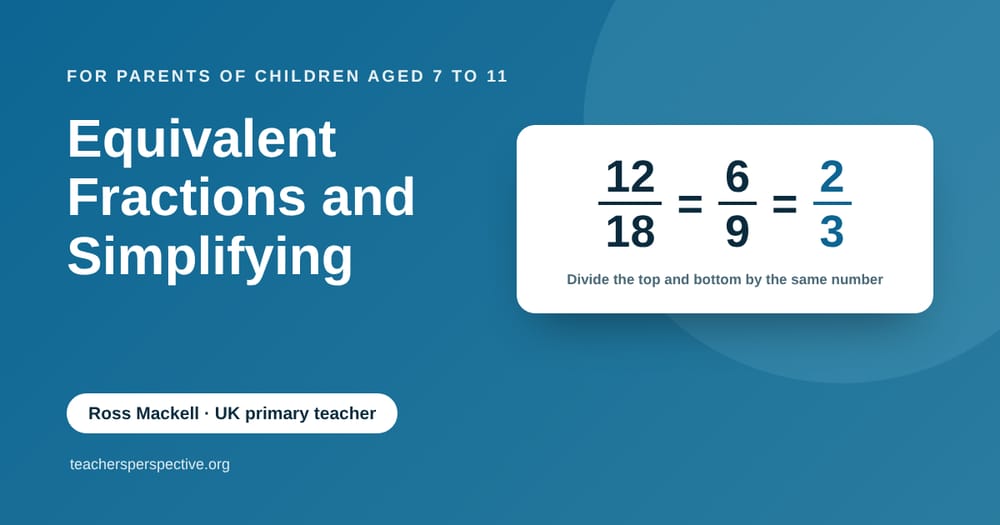
Simplify 12/18. Your child writes 6/9 and gets a cross. A UK primary teacher explains equivalent fractions, how to find and simplify them step by step, the one golden rule, and practice questions with answers.
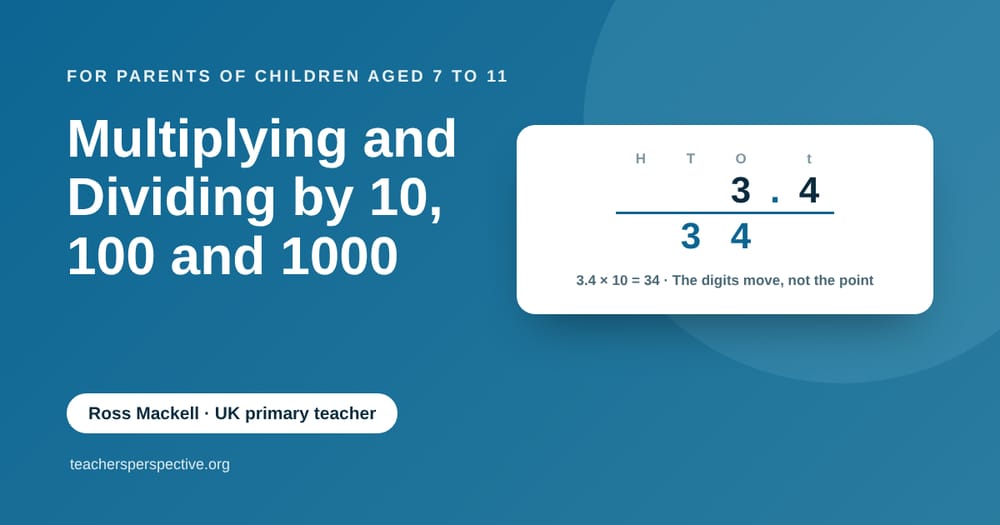
3.4 × 10 = 3.40? "Just add a zero" is one of the most common maths mistakes. A UK primary teacher shows how to multiply and divide by 10, 100 and 1000, why the digits move, what to do with zeros, and practice questions with answers.
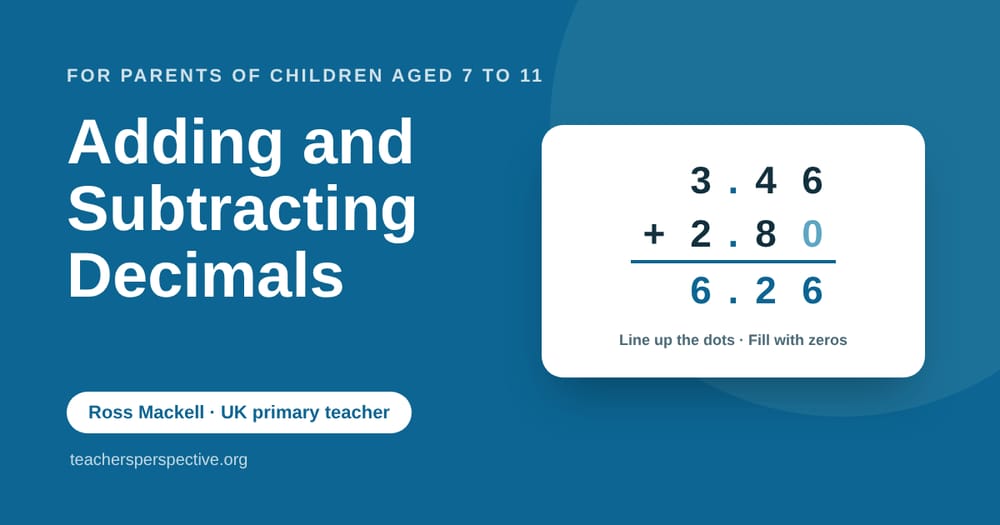
7.2 minus 3.65 trips up more children than almost anything else. A UK primary teacher shows how to add and subtract decimals step by step, the zero trick that fixes most mistakes, and practice questions with answers.
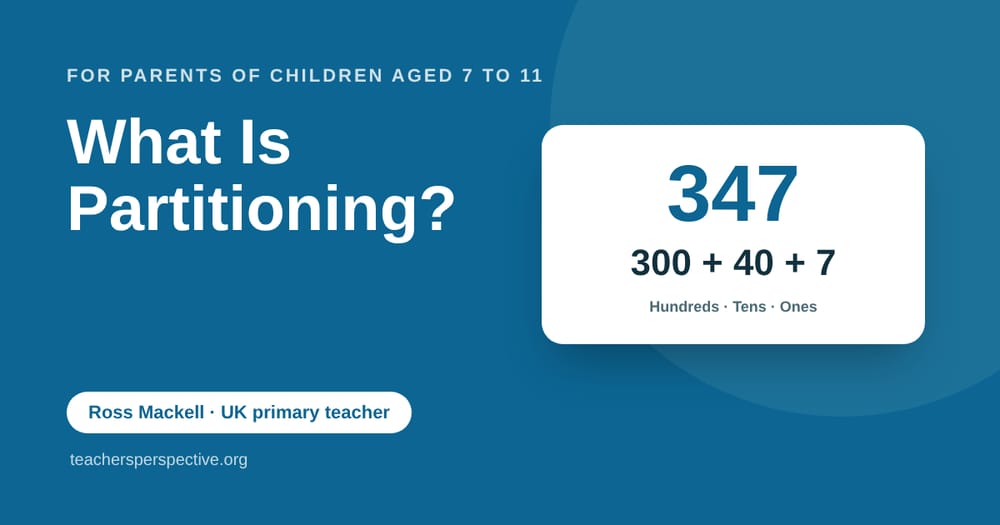
Partitioning means splitting a number into parts, like 347 = 300 + 40 + 7. A UK primary teacher explains standard and non-standard partitioning, the pictures schools use, why it matters for subtraction and multiplication, and how to practise at home.
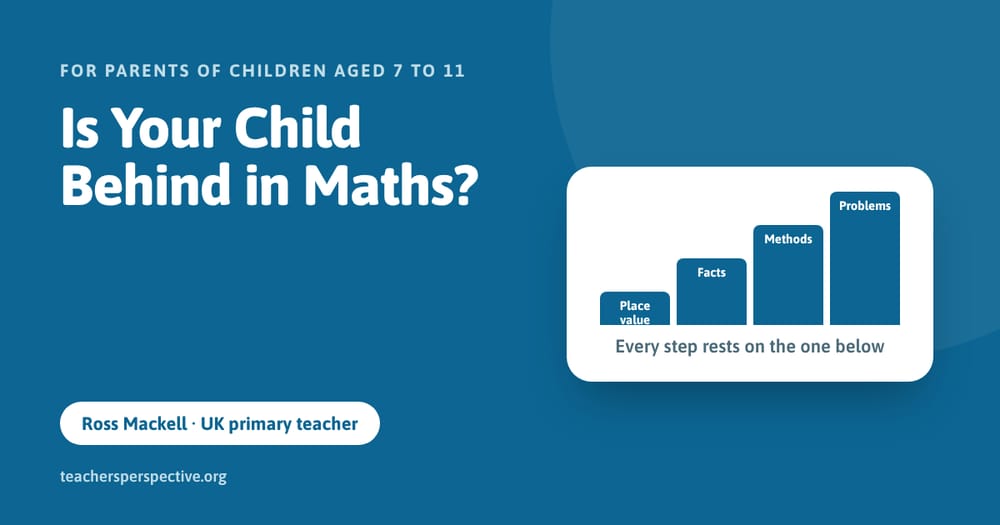
"They'll catch up, won't they?" A UK primary teacher explains why maths gaps usually grow each year, how to tell if your child is behind, and the one change that helps them catch up.
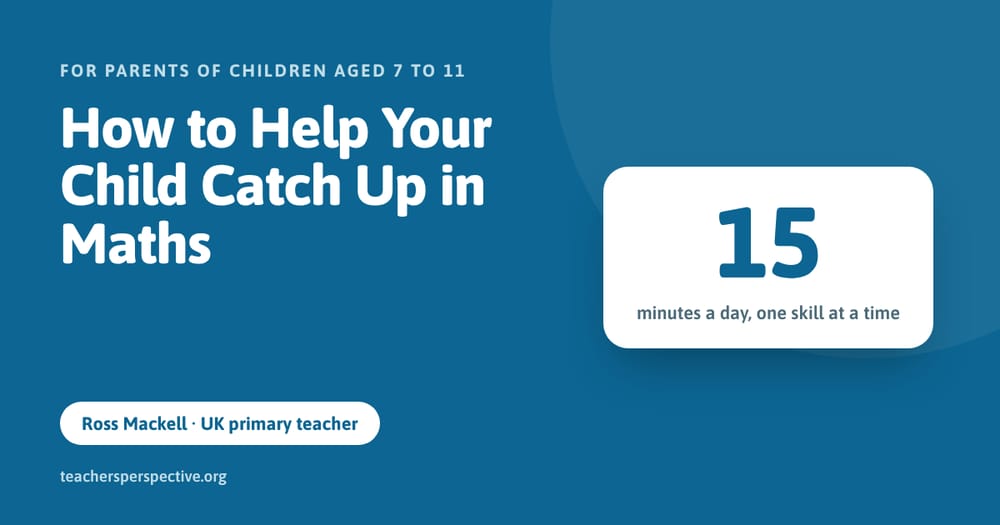
Is your 8 or 9 year old behind in maths? A UK primary teacher shows how to find the gap, a 15-minute daily routine and a 4-week catch-up plan you can follow at home.
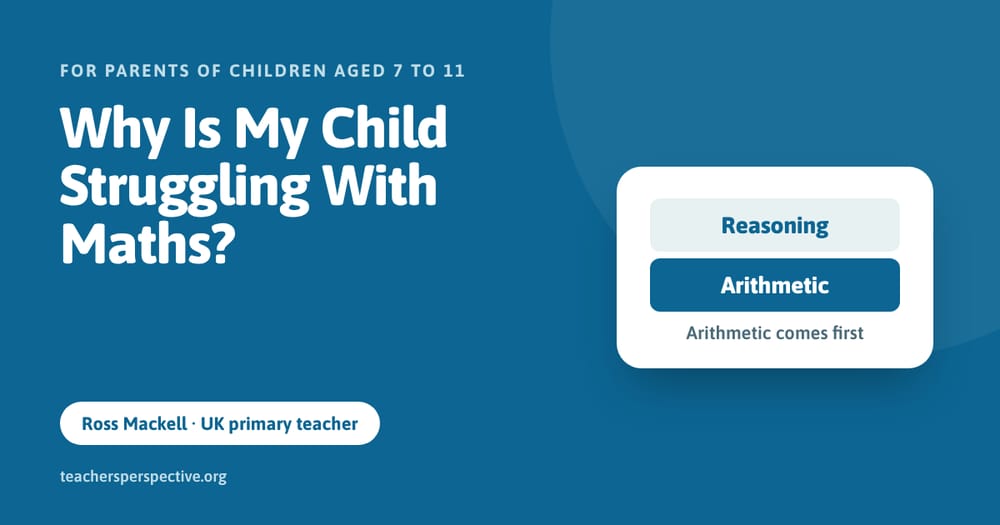
Most children who struggle with maths aren't struggling with all of maths. A UK primary teacher explains the real reason, the 7 signs to look for, and a simple 4-step plan to fix it at home.
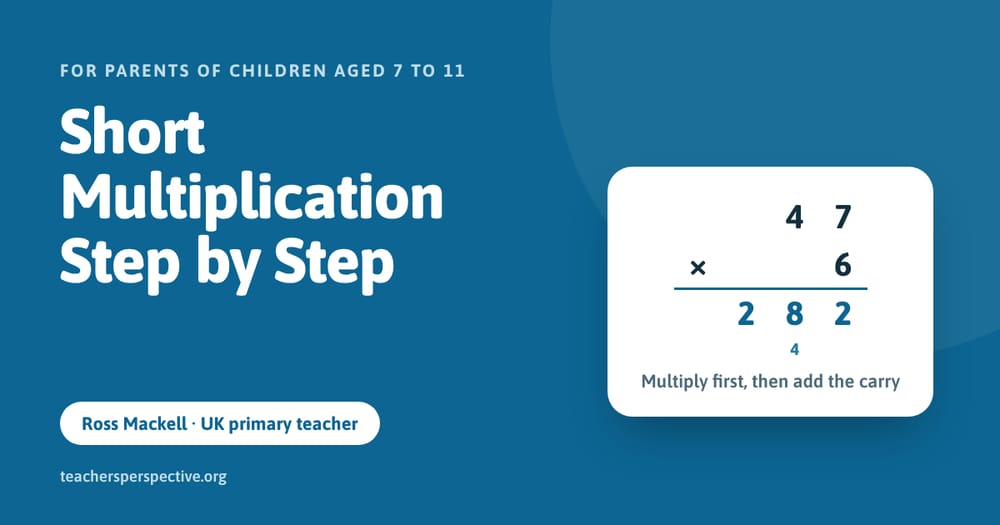
47 × 6 = 2,442? It's one of the most common mistakes in primary maths. A UK primary teacher shows short multiplication step by step, the expanded method that comes first, carrying, zeros and practice questions.
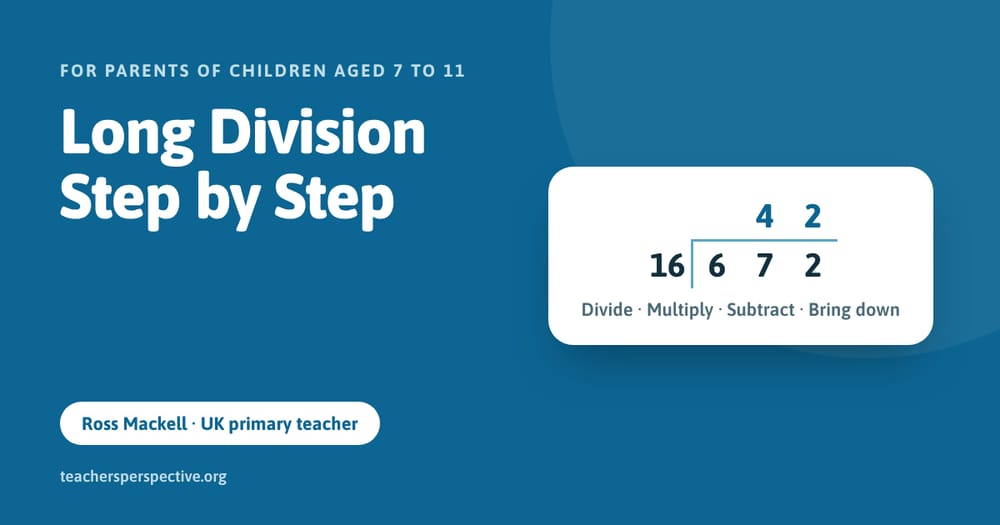
672 ÷ 16 looks scary, but long division is just four small steps on repeat. A UK primary teacher shows the method step by step, the multiples trick, how to handle remainders and the 3 mistakes to watch for.
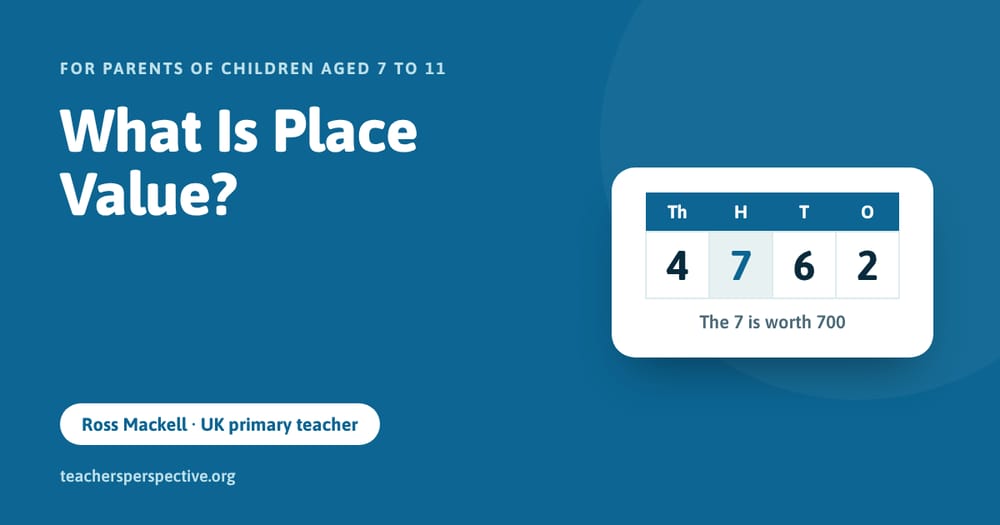
Ask your child what the 7 is worth in 4,762. Their answer tells you a lot. A UK primary teacher explains place value, what each year group learns, the common mistakes and a 10-minute routine for home.
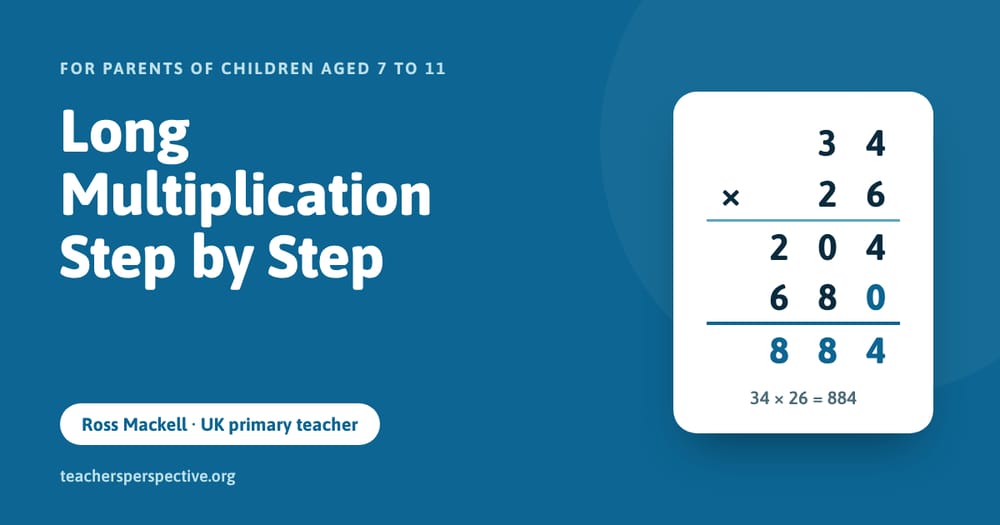
Why do you put a zero in long multiplication? A UK primary teacher explains long multiplication step by step, with worked examples, the grid method, common mistakes and practice questions.
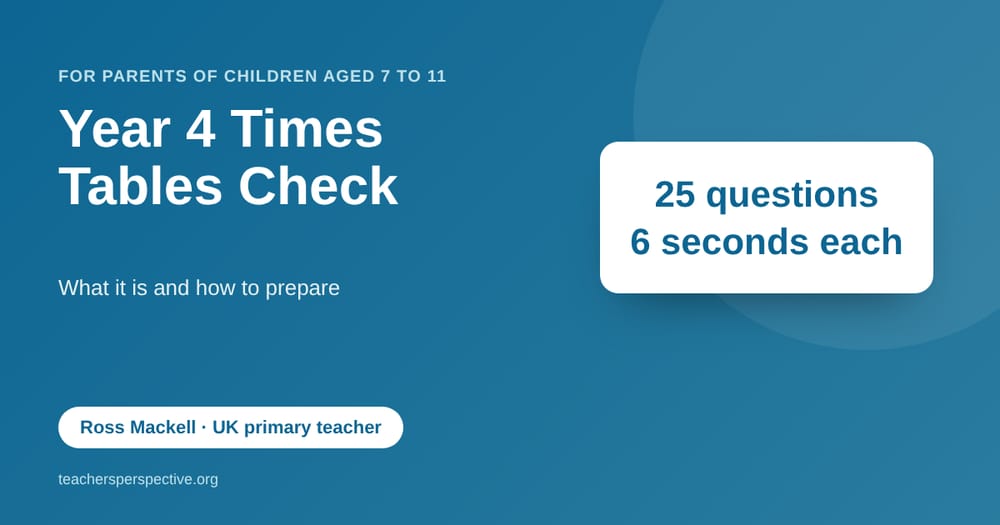
25 questions, 6 seconds each. Here's exactly what the Year 4 multiplication tables check is, the 11 facts most likely to come up, why six seconds catches so many children out, and a simple plan to get your child ready.
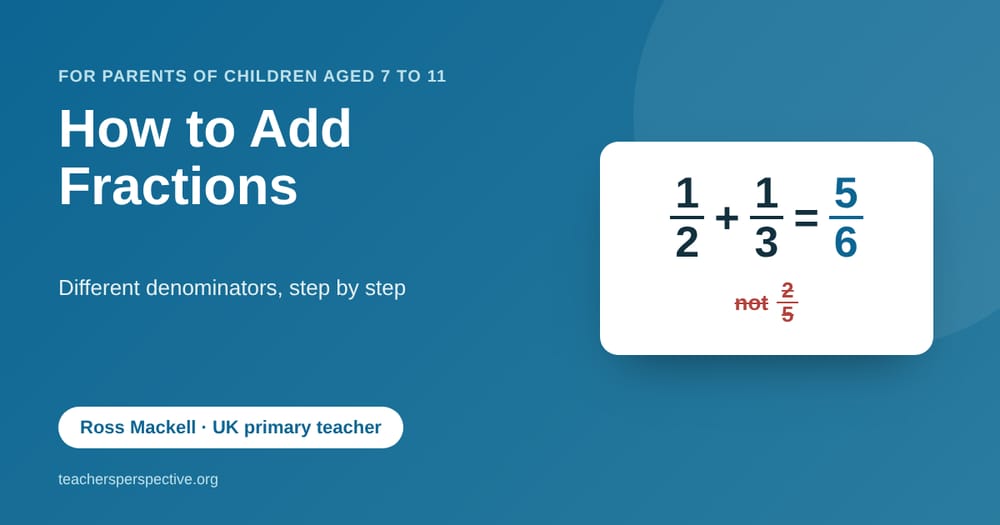
What's a half plus a third? If you said two fifths, you've made the most common fractions mistake there is. Here's how your child is taught to add fractions with different denominators, step by step.
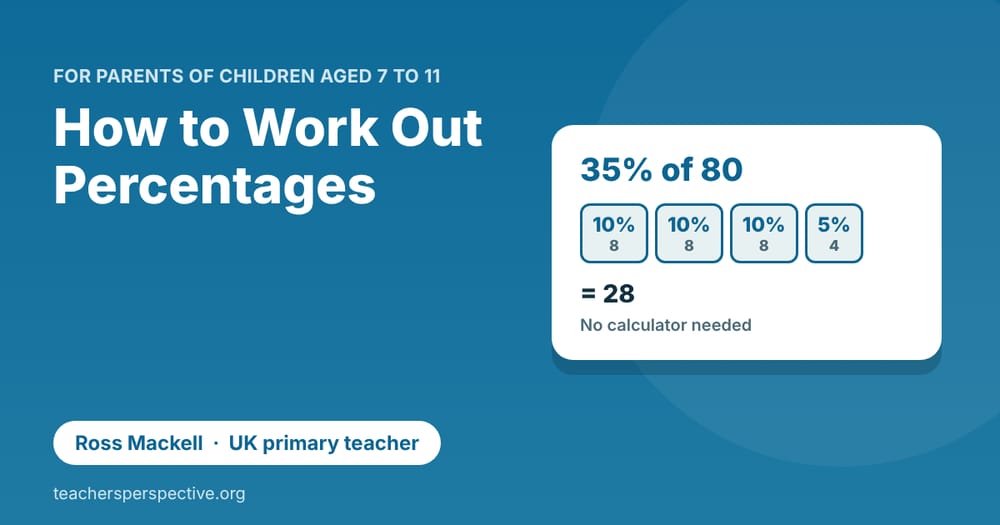
What's 35% of 80? Most parents reach for a calculator, but your child is expected to do it on paper in Year 6. A UK primary teacher shows the four percentages that unlock all the others, how to work out discounts, and the 3 mistakes to watch for.
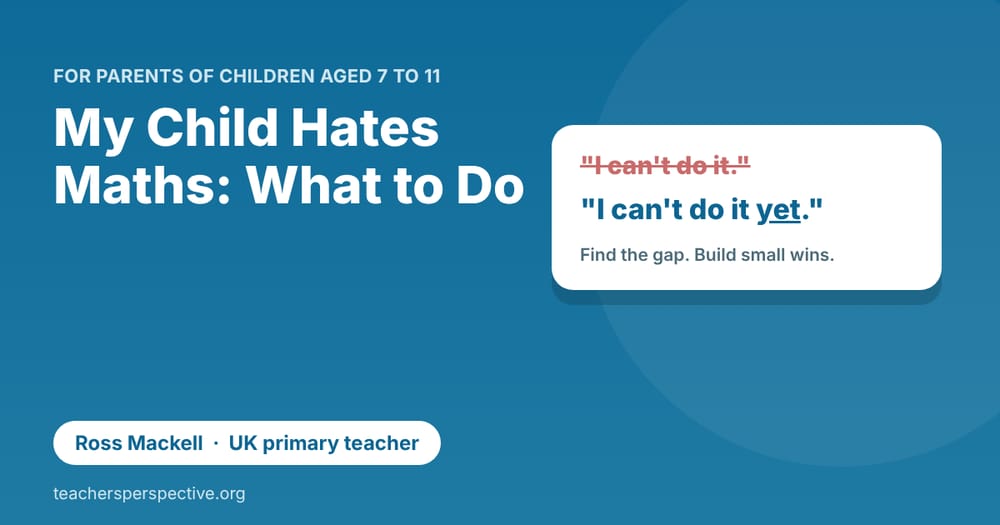
Your child says they hate maths. In over ten years of teaching, I've almost never met a child who truly does. A UK primary teacher explains why it happens, what to say instead, and a small-wins plan to rebuild confidence at home.
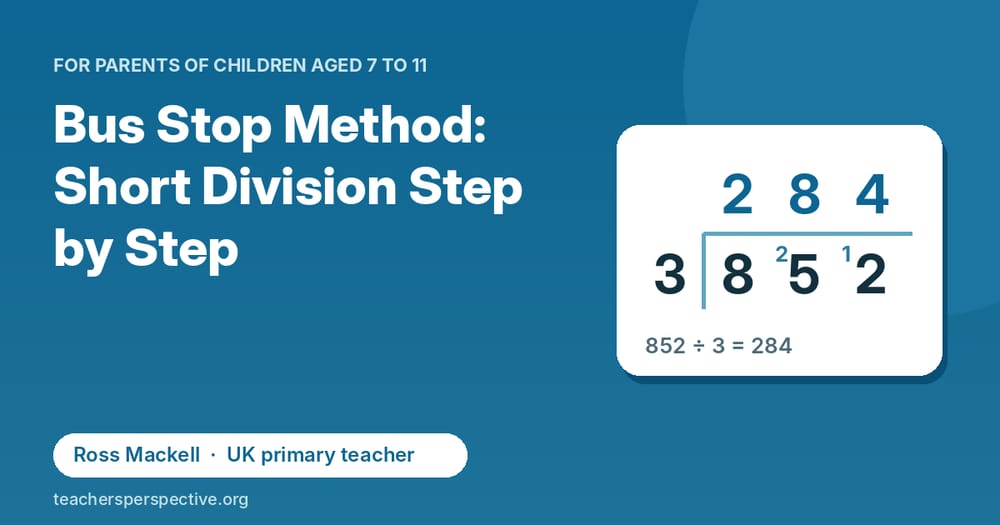
Your child works out 852 divided by 3 and gets 210. The answer is 284. A UK primary teacher shows exactly how the bus stop method works, what to do with zeros and remainders, and the 3 mistakes to watch for.
Exclusive For You
Lead Magnet Value Offer
Lorem ipsum dolor sit amet, consectetur adipisicing elit. Autem dolore, alias,numquam enim ab voluptate id quam harum ducimus cupiditate similique quisquam et deserunt,recusandae.
