For parents of children aged 7 to 11
Close maths gaps at home in 10 minutes a day

All 15 written methods your child needs for primary school, taught step by step by a UK primary teacher, in the exact order they must be learned.
£49
One payment.
Lifetime access.
Start tonight!
IMPROVEMENT IN 30 DAYS OR YOUR MONEY BACK*
Priced in USD $65 for international payments -
UK customers will pay ~£49
What's Inside?
- 91 short video lessons covering all 15 methods
- A starting assessment so you know exactly where the gaps are
- A mini test after every module
- A final mastery assessment to see the before and after
- Printable practice for every method
- Lifetime access. No subscription, nothing to cancel.
Hi, I'm Ross!


I'm a UK-qualified primary school teacher, and I've been teaching for over 10 years.

In that time I've watched the same thing happen again and again. A bright, capable child starts to fall behind in maths. Not because they aren't clever enough. Because somewhere along the way, one of the written methods never fully landed, and everything built on top of it started to wobble.
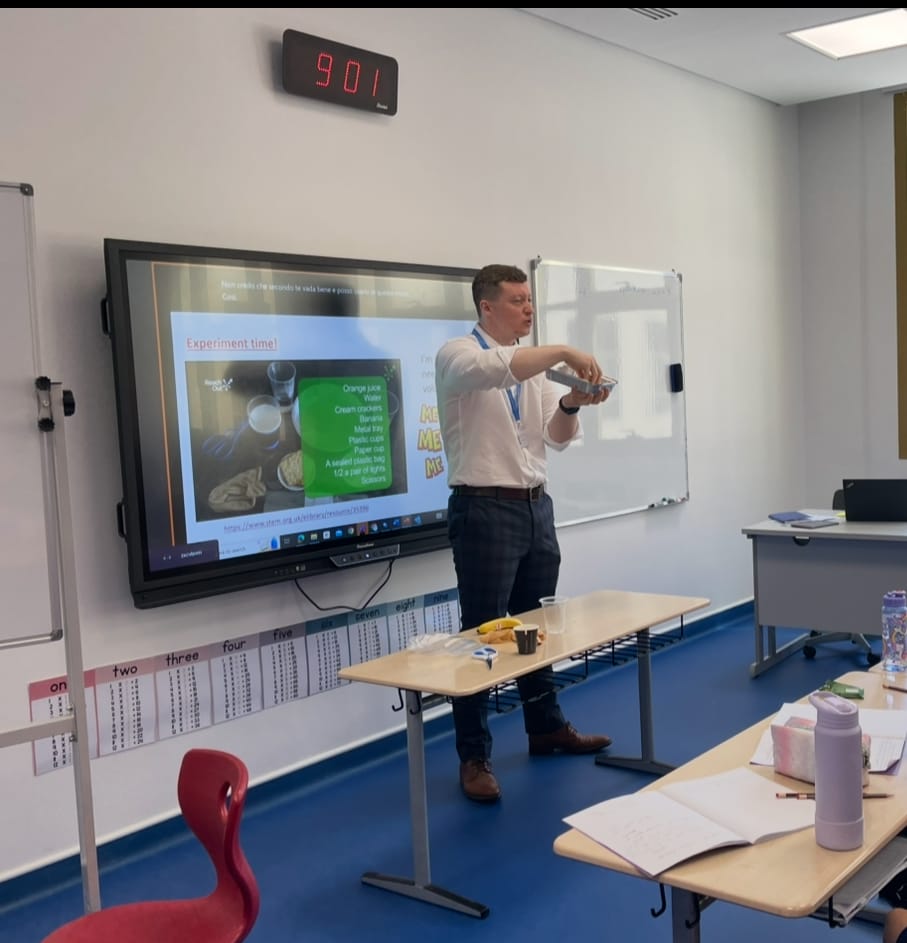

With 30 children in a class, there is never time to go back and fix that for every child. I know, because I'm the teacher standing at the front trying.

So I recorded every method myself, slowly and clearly, in the right order, so you can close those gaps at your own kitchen table.
Does this sound familiar?
- Homework that should take 10 minutes turns into 40 minutes of tears
- They still count on their fingers for sums they should just know
- They guess, then look at your face to see if they got it right
- "I can't do this" before they've even read the question
- "I forgot how to do it" about something they could do last term
- You've tried apps, worksheets and YouTube videos, and nothing has stuck
None of this means your child is bad at maths.
It means a method is missing.
And there are only 15 of them.
Every method your child needs, in the order they need it
Each module teaches one method. Each one builds on the one before it, which is why the order matters so much.
Adding and subtracting
1. Add and subtract 10
2. Add and subtract 100
3. Add and subtract numbers over 100
4. Add and subtract 1000
5. Add and subtract 3-digit numbers
6. Add and subtract 4-digit numbers
7. Add and subtract decimals
8. Add and subtract fractions
Multiplying
9. Times tables
10. Multiply 2-digit by 1-digit
11. Multiply 3-digit by 1-digit
12. Multiply 3 numbers together
Dividing and fractions
13. Divide 2-digit by 1-digit
14. Multiply and divide by 10, 100 and 1000
15. Find fractions of an amount
Watch. Copy. Practise.
Remember how you learned your spellings at school? This works the same way. It isn't flashy. It just works.
Watch
Your child watches me demonstrate one method, slowly, start to finish. Lessons are about 4 and a half minutes, because that's how long a struggling child can really concentrate.
Copy
They do the same question alongside me, step for step, while it's fresh. This is the step most people skip, and it's why children fall apart when they try on their own.
Practise
They do a few similar questions by themselves, same method, no surprises, until it stops needing any thought at all.
You don't have to teach any of it. I'm the teacher. Your job is to sit nearby, keep things calm, and watch it happen. Ten minutes a day is enough.
Have a look inside!
This is a walkthrough of the actual course. The lessons, the modules and the assessments, exactly as your child will see them.
*Improvement in 30 days, or your money back
Do one lesson a day for 30 days. If you don't see visible progress in your child's maths, email me and I'll refund you in full.
I can offer this because I know what happens when a child finally gets taught the methods properly, in the right order. You take no risk at all.
What changes first isn't the marks, it's the willingness to try. Here's what other parents noticed:
"So encouraging to see her study semi-independently, regardless if she improves at Maths."
- Rosie, mum of an 8 year old
"When kids get to do easier work, then the anxiety dies down. I let him do 2 easy pages and then he was more willing to do grade level stuff so we feel like we are not behind."
- Yianjoo, mum of a 9 year old
"I wanted a clear plan of action, I wanted reassurance that we could get him on track."
- Mira, mum of an 8 year old
Why this works when nothing else has
Primary maths is really two different things wearing one name.
Reasoning and problem solving: Word problems, multi-step questions, "explain your answer". This is where school spends most of its time.
Arithmetic: The written methods. Where the numbers go, where the line goes, which end you start from. There are exactly 15 of them.
Here's the part nobody tells parents. Reasoning is built on top of arithmetic. Always. A child can't reason their way through a problem if they can't do the calculation the problem asks for.
So when your child gets a word problem wrong, it looks like a reasoning problem. It almost never is. The method underneath was never secure.
And the gap is usually further back than it looks. A child drawing dots and circles to work out 165 divided by 5 doesn't have a division problem. It's place value, several methods earlier. Practise division for a month and nothing changes.
That's why apps and extra worksheets haven't worked. They test your child over and over. But testing isn't teaching. If a method was never taught properly, being tested on it a hundred more times won't give it to them.
Arithmetic Mastery 2.0 finds the gap, teaches the method, then practises it, in the right order, until your child owns all 15.
Stop trying to fix the word problems. Fix the arithmetic underneath them.
Frequently Asked Questions
I'm not good at maths myself. Can I still do this?
Yes. I teach every method on video and your child copies from me. You don't need to know anything, and it actually helps if you don't teach your own version, because school methods have changed since we learned.
How long does it take?
About 10 minutes a day.
Will it match what they do at school?
Yes. These are the standard written methods, aligned to the National Curriculum for England and Wales and the Scottish Curriculum for Excellence.
My child is 11 and quite far behind. Is it too late?
No. Older children move through the early modules quickly, and that confidence carries them into the ones they missed. The starting assessment shows you where to begin.
Is it a subscription?
No. One payment of £49 and it's yours for life.
Your Child Isn't Bad At Maths
They're missing a small, specific set of methods. There are only 15, and every one of them can be taught.
Nobody has sat down and taught all 15 in order, because there's never time in a class of 30. At your kitchen table there is time. Ten minutes of it.
£49. One payment. Lifetime access.
Remember, you're covered by the 30 day guarantee. Do the lessons, and if you don't see progress, you get your money back.

Copyright © 2026 Teacher's Perspective | All Rights Reserved.